If you have ever watched a piece of Federal-period furniture or a Chinese export porcelain bowl sell for a surprising sum at a New England auction, you already know that not all decorative arts are valued equally. Decorative arts auction prices are shaped by a complex set of factors — period of origin, regional provenance, rarity, and the particular tastes of a sophisticated collector market that has deep roots here in New England. Understanding why certain periods consistently outperform others at auction can help collectors, estate executors, and individual owners make far more informed decisions about their holdings.
New England has long been one of the most active markets for American Federal and Colonial-period decorative arts in the country. Pieces produced between roughly 1780 and 1830 — particularly those attributable to Boston, Salem, or Newport cabinetmakers and silversmiths — carry a regional prestige that elevates their auction performance well above comparable pieces from other parts of the country. Collectors in this region place a premium on documented local history, and auction houses here know it. A secretary desk with a verifiable Boston provenance can command multiples of what a nearly identical piece from a Southern workshop might bring.
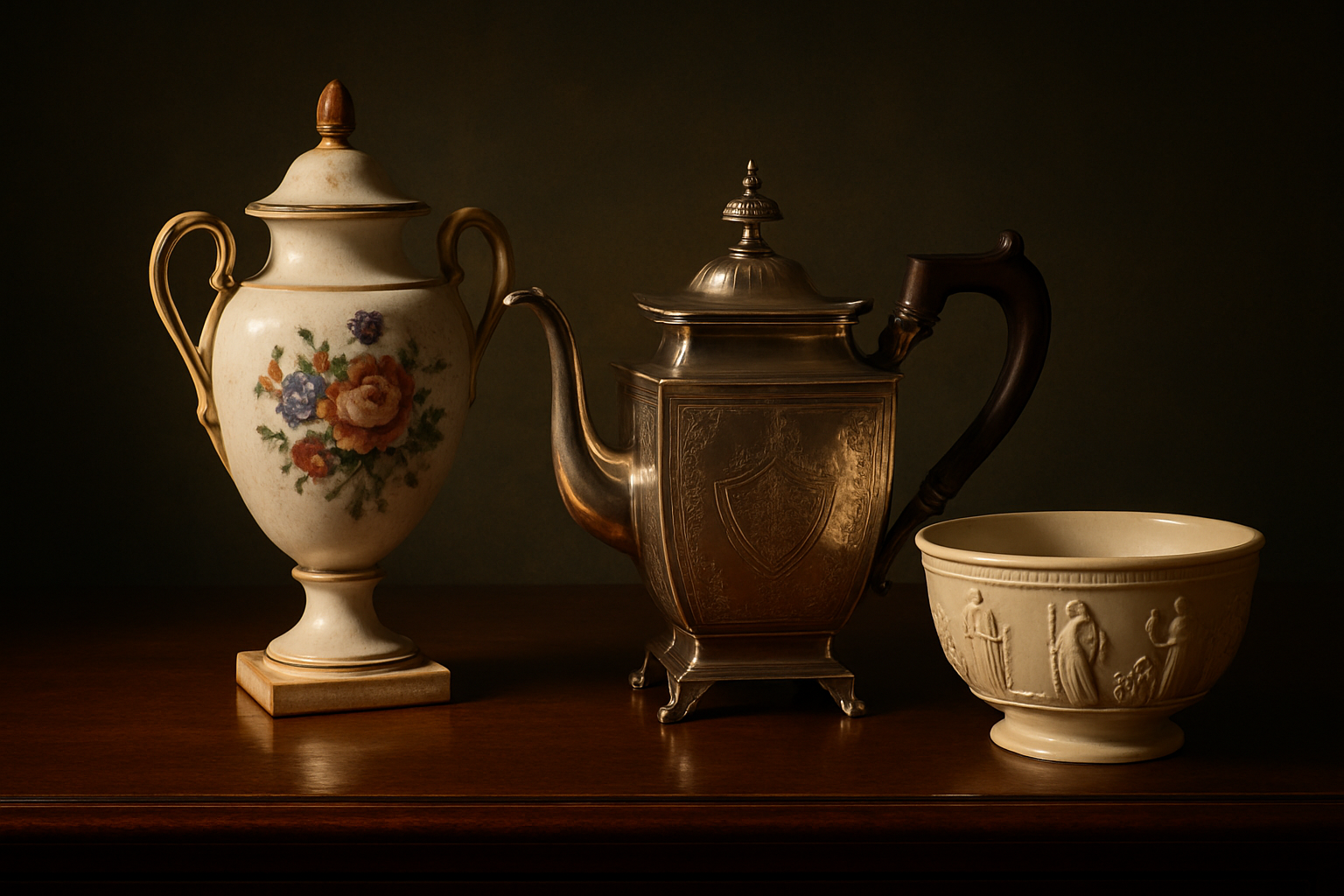
Eighteenth-century English and Continental decorative arts also perform strongly in New England rooms, reflecting the historical trading and cultural relationships that shaped the region’s tastes. Meissen porcelain, Wedgwood creamware, and Georgian silver with original hallmarks retain their appeal season after season because they represent craftsmanship at a level that modern production simply cannot replicate. Rarity is a constant driver: when a particular form or glaze was produced in limited numbers, auction competition intensifies accordingly.
The Arts and Crafts movement of the late nineteenth and early twentieth centuries represents another period that reliably commands strong decorative arts auction prices in New England. Boston was a national center of this movement, and pieces by makers associated with the Society of Arts and Crafts — Grueby Pottery, Dirk van Erp, and their contemporaries — regularly attract serious bidding. Condition, original surface, and maker documentation all factor heavily into final hammer prices for this category.
What many owners overlook is that decorative arts auction prices are not static. Market research plays a critical role in understanding where a particular piece sits relative to current collector demand. As we explain in our article on how market research drives accurate fair market value appraisals, comparable sales data, active buyer pools, and shifting tastes all influence what a piece will realistically achieve on any given day. Additionally, understanding what decorative arts appraisers look for when valuing a collection can help owners set realistic expectations before bringing items to market.
As a locally owned and operated firm with over 20 years of experience serving New England collectors, we at Manzi Appraisers & Restorers bring deep familiarity with the regional auction landscape and the periods that consistently attract the strongest buyer interest. Whether you are preparing an estate, considering consignment, or simply curious about what you own, a professional appraisal is the essential first step toward understanding true market value.
We invite you to reach out to our team for a consultation. Call us at 617-995-0022 or visit us on Facebook at https://www.facebook.com/ManziAppraisers/ to learn more about our appraisal and consignment services for decorative arts across New England.