An estate sale can unfold with surprising speed, and for families navigating the process in New England, the risk of losing significant value on fine art and antiques is real. Whether a collection has been assembled over decades or inherited across generations, items that enter an estate sale without proper documentation and professional appraisal are routinely undervalued, misidentified, or sold for a fraction of their true worth. Understanding what actually happens during this process — and how to safeguard your interests before it begins — is essential.
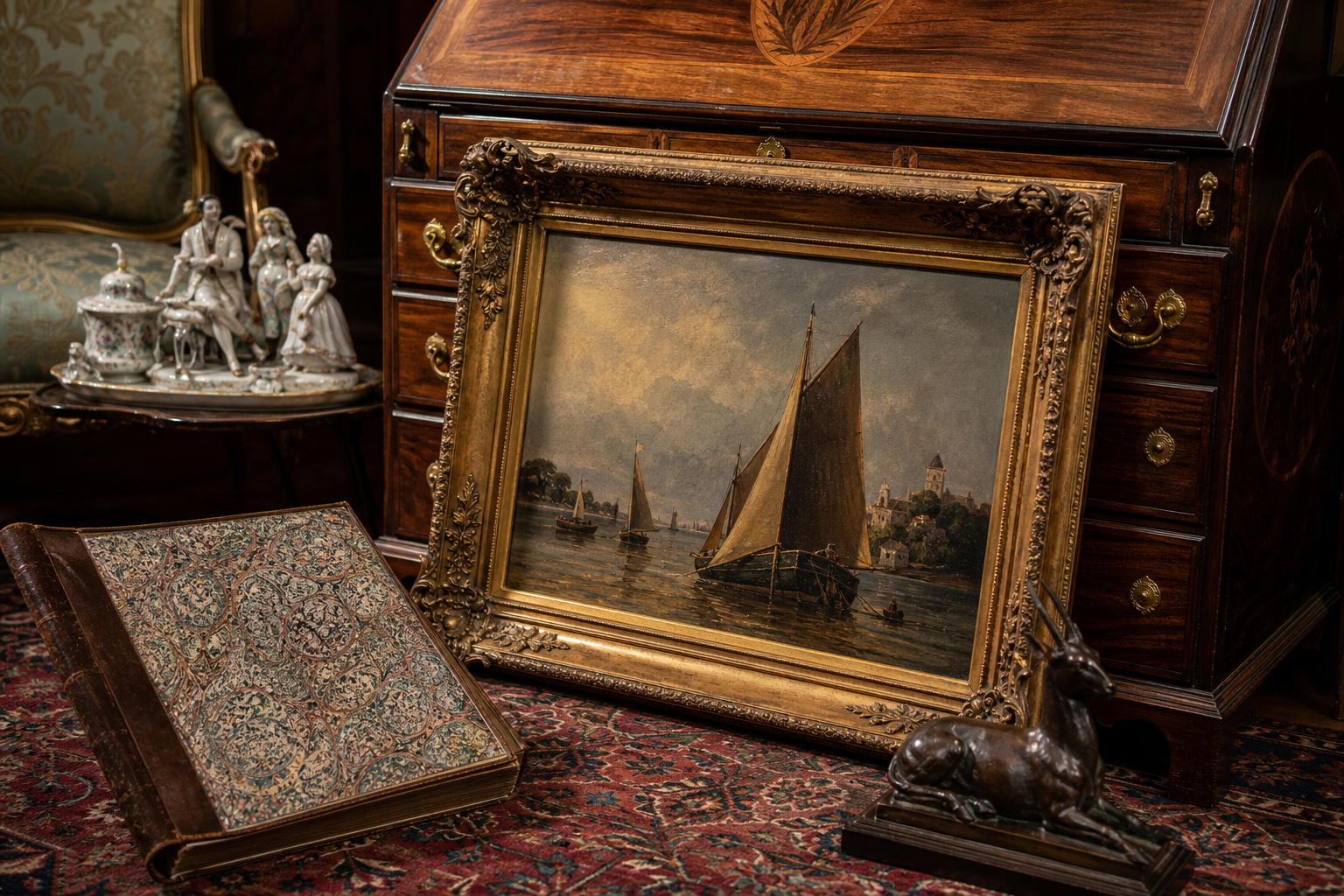
The estate sale process in New England typically moves quickly. Liquidators are hired to sort, price, and sell the contents of a home, often within a matter of days. These professionals are skilled at organizing and selling household goods, but they are rarely qualified to accurately assess the value of fine art, period antiques, decorative arts, or rare furnishings. A significant painting may be tagged at a modest price based on visual guesswork. A piece of 18th-century American furniture might be grouped with ordinary household items and sold before a knowledgeable buyer even has a chance to examine it. The financial consequences for an estate — and for heirs who may not know what they’re missing — can be substantial.
As a locally owned and operated firm with over 20 years of experience serving New England estates, we have seen this pattern play out many times. Families arrive at us after an estate sale has concluded, asking whether a particular item that sold for a few hundred dollars might have been worth considerably more. In many cases, it was. The solution is straightforward: engage a qualified appraiser before the estate sale begins, not after.
A professional appraisal conducted prior to the sale gives executors and heirs an accurate, defensible understanding of what each item is worth. This matters not only for pricing purposes but also for equitable distribution among beneficiaries, potential tax considerations, and informed decisions about whether to sell, donate, or retain specific pieces. If you are weighing those choices, our guidance on selling, donating, or keeping inherited fine art can help clarify the decision-making process.
Provenance also plays a critical role in determining what an item is truly worth at the time of sale. Documentation of an object’s ownership history, exhibition record, or original purchase can meaningfully elevate its value in the marketplace. Without that research, even genuinely important pieces can fail to attract serious buyers or appropriate bids. Our appraisers conduct the kind of thorough market research and historical investigation that ensures nothing of significance is overlooked or undersold.
The fall season also presents a practical consideration: New England estates frequently schedule liquidations during autumn, when families have returned from summer and are beginning to address end-of-year matters. Acting early in the process — before items are catalogued by a liquidator — gives you the most options and the strongest negotiating position.
It is also worth noting that appraisal values shift over time in response to the market, so even items appraised years ago for insurance purposes may carry a different fair market value today. Understanding why fine art appraisal values change is an important step in ensuring your estate’s assets are accurately represented at the time of sale.
At Manzi Appraisers & Restorers, we work closely with estate executors, attorneys, and families throughout Boston and across New England to ensure that fine art and antiques receive the professional attention they deserve before a single item changes hands. To protect your interests during an estate sale, call us at 617-995-0022 or visit us on Facebook at https://www.facebook.com/ManziAppraisers/ to learn more about our estate appraisal services.