Antique furniture carries history in every joint, finish, and hand-carved detail. But knowing when to restore and when to preserve is key to protecting both the integrity and the value of a piece. Restoration, when done professionally, can revive elegance and functionality—but the wrong approach can unintentionally diminish what makes an item valuable.
Every antique tells a story through its materials, craftsmanship, and condition. Over time, exposure to humidity, temperature shifts, wear, or poor storage can lead to cracked veneers, loose joinery, faded finishes, or missing components. Restoration can address all of these—but only when guided by knowledge of the furniture’s era, construction, and market value.
One of the most common misconceptions is that older automatically means more valuable. While age does play a role, condition and originality are equally important. For some high-value items—especially those with historical or museum-level significance—over-restoring can erase the very patina that collectors prize. In such cases, conservation (gentle cleaning, structural stabilization, and minimal intervention) is the preferred approach.
That’s why the first step is always assessment. We examine the wood species, hardware, joinery techniques, finish layers, and any previous restoration efforts. Our trained eyes can distinguish between original elements and replacements, identifying whether the piece is a rare example worth conserving or a practical antique that can benefit from careful enhancement.
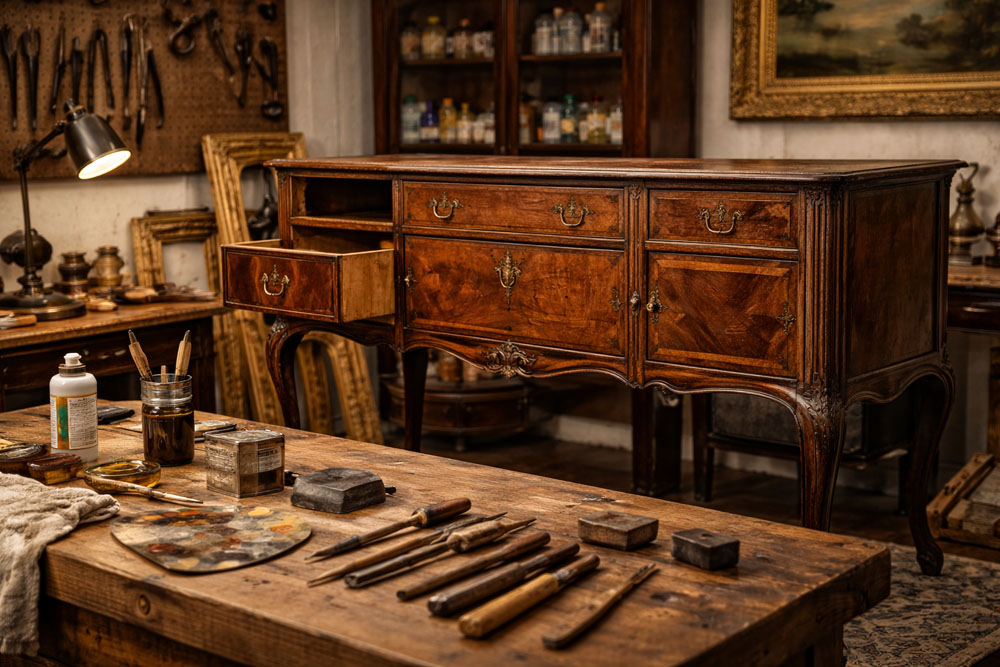
When restoration is appropriate, we aim to retain as much of the original as possible. That means using period-appropriate finishes, reversible adhesives, and traditional techniques. We repair rather than replace whenever feasible, ensuring the piece remains true to its time.
Refinishing, for instance, is only advisable when the original surface is beyond preservation or when a poor prior restoration has already altered the appearance. We may gently clean and revive finishes using materials that restore luster without stripping the wood’s aged character. Loose joints are tightened with hide glue; missing veneer may be matched using antique stock when available.
Restoration also enhances safety and usability. Wobbly chairs, unstable tables, or damaged drawers can be stabilized without compromising aesthetics. For clients who plan to use their antiques in daily life, functional restoration allows pieces to live on without fear of further damage.
We often collaborate with appraisers to ensure restoration adds value without erasing history. For estate planning, resale, or insurance purposes, documentation of any work done becomes part of the item’s provenance—a key factor in maintaining or increasing value.
Furniture restoration isn’t about making old pieces look new. It’s about honoring their origin while ensuring they’re strong enough to endure future generations.
To learn more about antique furniture care standards, visit the Foundation for Appraisal Education.
Contact Manzi Appraisers & Restorers at (617) 995-0022 or visit our Facebook page to request an evaluation and determine the right preservation approach for your antique furniture.
#FurnitureRestoration #AntiqueCare #PreserveHistory