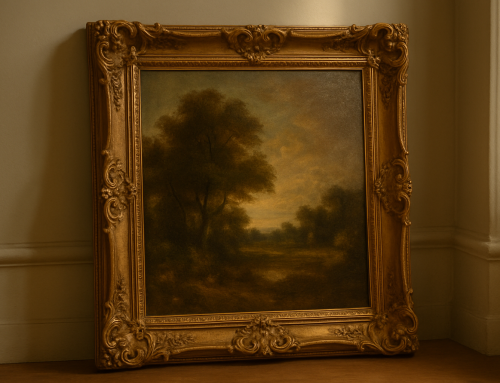
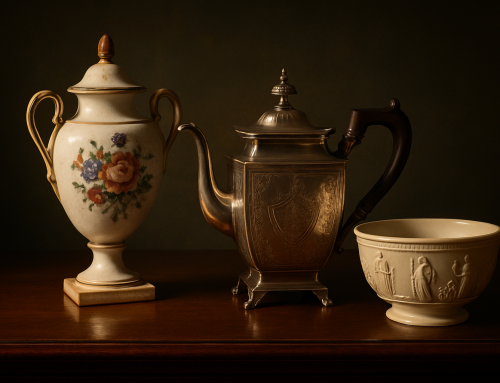
Disaster strikes unexpectedly. Whether it’s a burst pipe, a house fire, or smoke from a nearby blaze, the resulting damage to fine art and furniture can be devastating. But not all is lost. With professional restoration, many pieces can be recovered, stabilized, and preserved for future generations.
At first glance, fire and water damage often seem irreversible. Paintings may appear blistered, soot-covered, or warped. Furniture can swell, crack, or lose its finish. But these conditions don’t always mean permanent loss. Skilled restoration can reverse much of the visible and structural impact—if addressed quickly and properly.
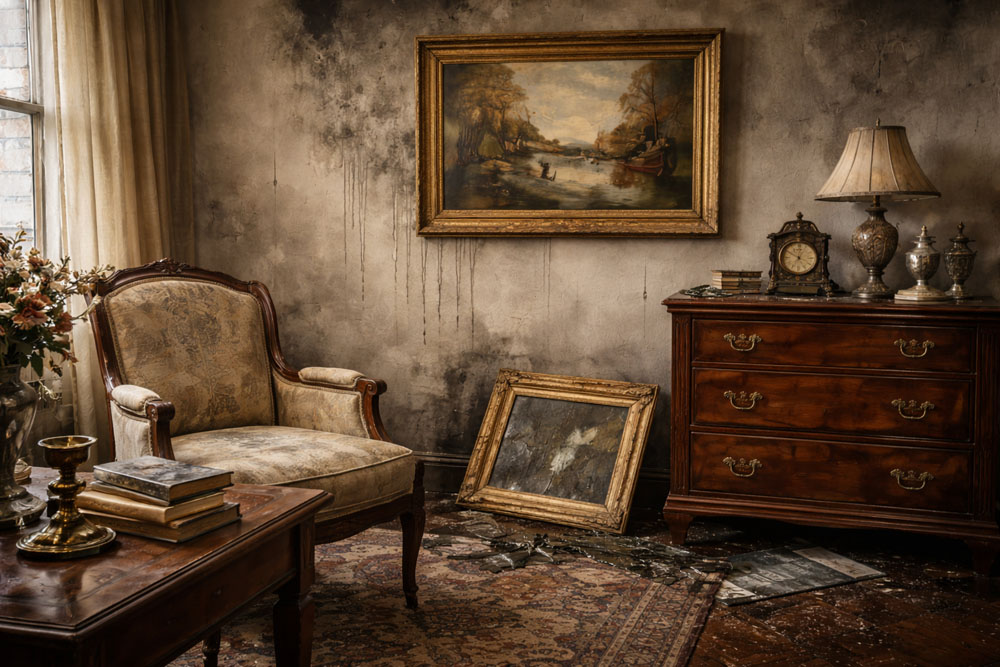
When a piece is exposed to water—through flooding, extinguishing efforts, or pipe leaks—the biggest threat is warping, mold, and delamination. We begin by drying items under controlled conditions to prevent further swelling or microbial growth. Then we stabilize the structure and evaluate surface damage.
Smoke and soot can cause both discoloration and chemical damage. That’s why we use specialized solvents and tools to clean paintings, frames, and wood without abrading original surfaces. Restoration of smoke-exposed artwork may also involve re-varnishing or inpainting—done conservatively to preserve the artist’s intent.
Fire damage presents additional complexity. Direct flame exposure can cause charring, blistering, or complete loss of material. But items in adjacent rooms often suffer only smoke or heat-related effects, which are much more treatable. For antique furniture, we can restore finish, repair structural joints, and even reattach detached components like veneers or carvings.
Each restoration begins with a thorough assessment. We document the damage with photographs, identify materials, and develop a treatment plan that balances preservation, value, and the client’s goals. We also work with insurance companies to provide condition reports, treatment estimates, and photographic evidence—ensuring a smooth claims process.
Timing is critical. The longer items sit in post-disaster conditions, the more permanent the damage becomes. Mold sets in within days. Wood continues to swell and split. Soot becomes more acidic over time. That’s why we encourage clients to reach out immediately following a loss—even if they’re unsure what can be saved.
Restoration doesn’t always mean a return to “like new.” For heirlooms and historical pieces, our goal is to retain character while stabilizing function and appearance. Even partial restoration can make an item displayable again and restore its role within a collection or home.
Our conservators use museum-approved materials and reversible techniques, ensuring no further harm comes to fragile or historic items. We also coordinate closely with appraisers if revaluation is needed after damage and repair.
In many cases, the emotional value of a painting or piece of furniture is greater than its market value. We understand that. That’s why we approach every restoration with respect—for the item’s story, the craftsmanship behind it, and the trust our clients place in us to bring it back to life.
To learn about disaster recovery for artwork, visit American Institute for Conservation Emergency Resources.
Contact Manzi Appraisers & Restorers at (617) 995-0022 or visit our Facebook page to schedule an emergency evaluation for damaged artwork or antiques.
#DisasterRestoration #ArtRecovery #FurnitureRepair