Decorative objects—such as porcelain, silver, glassware, and small sculptures—are often overlooked when assessing the value of an estate or collection. Yet these pieces can hold remarkable historical and monetary worth. Accurately appraising decorative arts requires more than a quick online comparison or an untrained opinion. It demands knowledge, precision, and access to the right valuation resources.
Decorative arts occupy a unique category in personal property appraisal. They’re highly varied in origin, use, and craftsmanship. From an 18th-century Chinese export vase to a mid-century Murano glass sculpture or a rare Tiffany silver set, each piece must be evaluated in context.
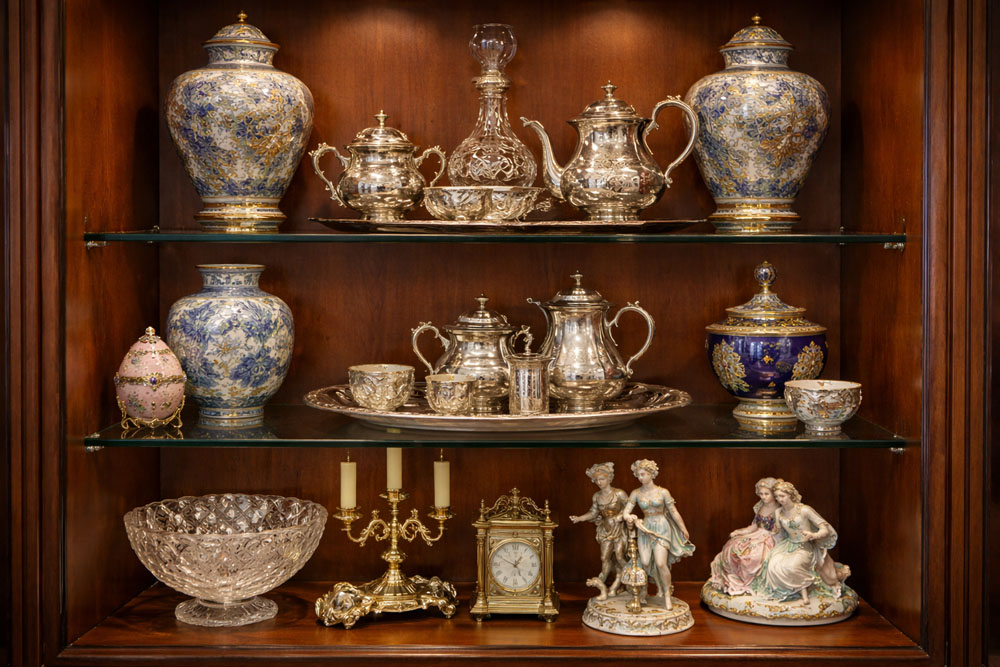
We begin every decorative arts appraisal with detailed inspection and documentation. We examine materials, construction techniques, hallmarks or maker’s marks, country of origin, date range, condition, and provenance. These elements often reveal subtle but significant distinctions that dramatically affect value.
Unlike mass-produced goods, many decorative pieces were handcrafted in small runs or as one-of-a-kind creations. This makes identification complex. Our appraisers rely on decades of market knowledge, archival references, and auction databases to accurately classify and value each item.
Condition is especially important in decorative arts. A barely visible chip, hairline crack, or restoration attempt can reduce value by as much as 50% or more. That’s why professional appraisers don’t just assign numbers—they document issues with photographs and descriptions to support defensible valuations.
Another critical factor is current demand. Market trends for certain makers, styles, or periods can rise and fall. For instance, Victorian silver might have strong historical appeal but limited resale value today, while 20th-century art glass may be on the rise. We stay current on these shifts to ensure our valuations are relevant and competitive.
Clients often come to us with entire cabinets of objects—some inherited, some collected. Without a professional appraisal, it’s nearly impossible to know which items are insurable, donatable, or worthy of consignment. Our process brings order and clarity to those collections.
Decorative arts appraisals also serve important legal and financial roles. Whether for estate settlement, divorce, insurance, or charitable donation, our USPAP-compliant reports meet all standards for use in court, tax filings, or insurance claims. We prepare reports for single objects or entire groupings with itemized breakdowns and high-quality photography.
We also guide clients on next steps. Some objects may be strong candidates for consignment, while others may benefit from restoration to increase display value. And in cases where clients choose to gift or donate, our documentation supports accurate valuation for IRS reporting.
Decorative objects may be small, but their value is anything but. With the right expertise, they become assets—not just accents.
To explore the world of decorative arts, visit The Decorative Arts Trust for educational resources and exhibitions.
Contact Manzi Appraisers & Restorers at (617) 995-0022 or visit our Facebook page to schedule a decorative arts appraisal with attention to history, craftsmanship, and market demand.
#DecorativeArts #AppraisalExperts #AntiqueValuation